
Business Guides • Website Strategy •
Free Websites
Explained
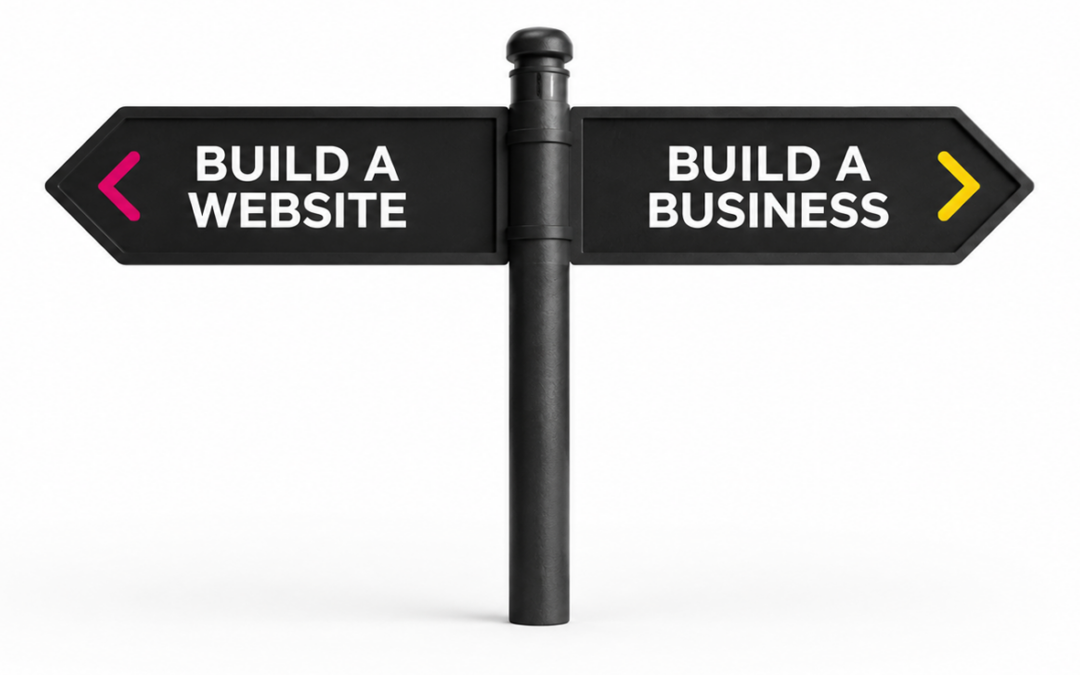
Some businesses simply need a website. Others need a strategy for growth. Understanding the difference is the first step towards making the right investment.
Business Guides • Website Strategy •
Free Websites Explained
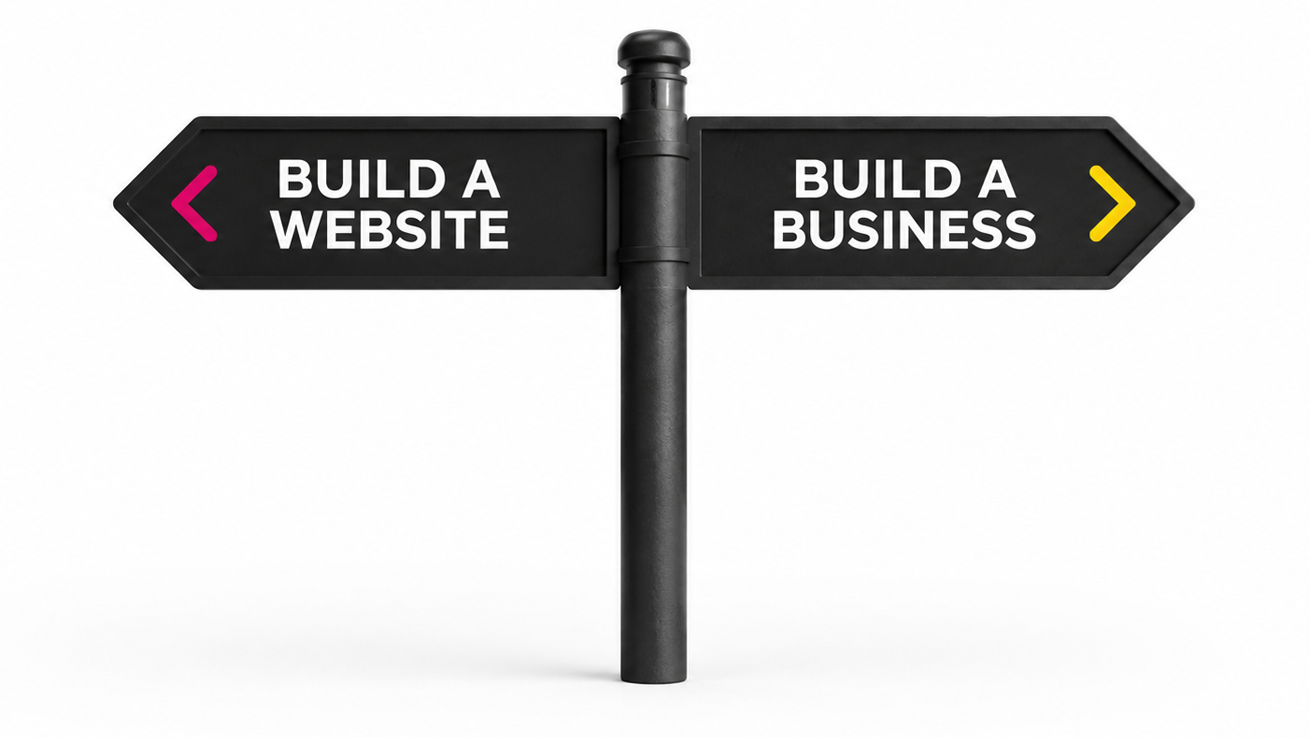
Some businesses simply need a website. Others need a strategy for growth. Understanding the difference is the first step towards making the right investment.
Are Free Websites Really Free?
One of the biggest misconceptions surrounding free website services is that the website itself is completely free. In reality, most providers use a subscription-based business model that spreads the cost of designing, hosting and maintaining your website over a longer period.
Rather than paying a large upfront fee, you will typically pay a recurring monthly subscription. This may include:
- Website hosting
- Security and software updates
- Routine website maintenance
- Technical support
- Occasional content updates, depending on the package
Some providers may also include domain management, email hosting or minor design changes, although the exact level of service varies considerably. This is why it is important to compare what is included, rather than looking only at the monthly price.
For many small businesses, this approach can make good financial sense. A new business may not have several thousand pounds available to invest in a website immediately, so a smaller monthly payment can make it easier to establish a professional online presence.
The website is not really free. The cost is simply being recovered in a different way.
A website provider still has to invest time, expertise and resources into planning, designing and building the site. Instead of charging for that work upfront, the provider recovers the cost through recurring payments over a longer period.
This is not unusual. Mobile phones, software, vehicles and many professional services are now sold through subscription or finance models. The customer avoids a large upfront payment, while the supplier earns predictable income over time.
Traditional Website
£2,500
↓
Ownership will usually transfer to your business, subject to the provider’s terms.
Hosting, maintenance and support are normally arranged separately.
Subscription Website
£0 upfront
↓
On-going monthly subscription.
Ownership and transfer rights depend on the provider and agreement.
↓
The provider recovers the build cost over time through recurring fees.
Neither approach is automatically better. One prioritises a larger upfront investment and lower ongoing dependence, while the other prioritises affordability and predictable monthly costs.
Key takeaway
You are not choosing whether to pay for a website. You are choosing how you pay for it, what is included and who controls it in the long term.
The real question is not, “Is this website free?” It is, “Which payment model makes the most sense for my business?”
Why Do Subscription Website Services Exist?
Now that we understand how subscription website services work, the next question is why they've become so popular. The answer is surprisingly simple: not every business needs the same type of website.
Every business starts somewhere. A sole trader launching their first venture has very different priorities to an established company looking to increase enquiries, strengthen its brand or compete more effectively online.
Subscription website services exist because they solve a very specific problem for businesses at a particular stage of their journey.
Businesses evolve
One of the biggest mistakes people make is assuming every business should invest in the same type of website. In reality, a company's needs change as it grows.
Business Idea
↓
Launch
↓
Build Reputation
↓
Grow
↓
Scale
At the launch stage, a business may simply need a professional online presence that tells people who they are, what they do and how to get in touch.
Later, that same business may want its website to generate enquiries, improve Google rankings, support marketing campaigns, build trust, showcase case studies or integrate with booking systems and customer databases.
The website hasn't changed because the technology has changed. It has changed because the business has changed.
Different businesses have different priorities
Imagine two businesses.
The first is a newly qualified electrician starting out on their own. They need a professional website quickly, a way for customers to contact them and enough credibility to begin winning work.
The second is an established engineering company employing twenty people. They already have customers, but their website is outdated, difficult to update and no longer reflects the quality of the business they've become.
Both businesses need a website, but they don't need the same website.
Subscription websites are often a sensible choice when:
- You're launching a brand-new business.
- You need an online presence quickly.
- Your marketing budget is limited.
- You're testing whether a business idea will succeed.
- Your website only needs to communicate the essentials.
The right solution at the right time
One of the reasons subscription website services have become so popular is that they lower the barrier to getting online. They allow businesses to establish credibility, begin attracting customers and start generating revenue without making a significant upfront investment.
For many businesses, that's exactly what's needed during the early stages.
However, as the business grows, expectations often change. A website gradually becomes more than an online brochure. It becomes a marketing tool, a sales tool and, in many cases, one of the business's most valuable assets.
The question isn't whether subscription websites are good or bad. The real question is whether they're the right solution for where your business is today.
The Questions You Should Ask Before Choosing Any Website Service
Whether you're considering a subscription website, a launch website or a fully bespoke solution, asking the right questions will help you choose the option that's right for your business.
The cheapest website can become the most expensive if it isn't the right fit for your business.
Who owns my website?
This is one of the most important questions to ask before signing up to any website service. Some providers transfer ownership to you once the project is complete, while others retain ownership as part of an ongoing subscription agreement. Neither approach is inherently right or wrong, but you should understand exactly what you're paying for and what rights you have before making a decision, especially if you plan to move your website to a new hosting platform.
Can I move my website to another provider?
Some websites can be moved to another hosting company with relatively little disruption, while others are built on proprietary systems that are designed to stay with the original provider. If flexibility is important to you, ask whether your website can be transferred and whether there are any costs or restrictions involved. Some hosted platforms allow you to export parts of your content or business data, but the original design, functionality or website structure may not transfer directly to another system. Examples of these types of platforms include Wix, Squarespace and Shopify.
What happens if I stop paying?
The answer varies between providers. Some will suspend your website, while others may remove it completely or retain ownership of the design. Always ask what happens if you decide to cancel so you understand the long-term implications before committing to any agreement.
Is SEO included?
Many providers include basic technical SEO, such as page titles and meta descriptions, but that doesn't necessarily mean the website has been researched or optimised to compete in search engines. If attracting customers through Google is important, ask what level of keyword research, page optimisation and ongoing SEO support is included.
Who writes the website content?
Some providers expect you to supply all the text, while others offer copywriting as an additional service. Well-written content doesn't just explain what you do, it helps customers understand why they should choose your business and gives search engines more context about the services you provide.
Who supplies the photography?
Photography has a significant impact on how professional a business appears online. Some providers rely on stock images, while others encourage businesses to supply their own photographs or arrange a professional photoshoot. Authentic images often build more trust than generic stock photography, particularly for service-based businesses.
Can I choose any design I want?
Some website services offer complete creative freedom, while others work from a library of pre-designed layouts that can be customised with your branding and content. Templates aren't necessarily a disadvantage, they often allow websites to be produced more quickly, but it's worth understanding how much flexibility you'll have as your business evolves.
Can my website grow with my business?
Your business today may look very different in two or three years’ time. If you later need additional service pages, online booking, e-commerce, membership areas, customer portals or integrations with other software, ask whether these can be added to the existing website or whether a complete rebuild would be required. Thinking ahead can save considerable time and money as the business develops.
Comparing Your Website Options
There is no single type of website that is right for every business. A subscription website, a professionally planned launch website and a larger bespoke website are designed to meet different needs, budgets and stages of growth.
The table below provides a general comparison. Website packages vary considerably between providers, so it is important to confirm exactly what is included before making a decision.
The aim is not to choose the website with the longest feature list. It is to choose the solution that best supports your business now, without unnecessarily limiting where it can go next.
| Comparison | Subscription Website | Launch Website | Larger Bespoke Website |
|---|---|---|---|
| Typical business stage | New businesses needing a straightforward online presence | Start-ups and small businesses wanting a stronger foundation | Established or growing businesses with more complex goals |
| Upfront investment | Usually low or no upfront build cost | Affordable one-off investment | Higher investment reflecting the scope of the project |
| Ongoing cost | Usually an ongoing monthly subscription | Hosting, maintenance and optional support | Hosting, maintenance and any agreed ongoing services |
| Ownership | Depends on the provider and agreement | Built as a website asset for your business | Built as a website asset for your business |
| Design approach | Often based on established templates or standardised layouts | Bespoke design shaped around your brand and core message | Fully tailored design across a wider website structure |
| Business planning | Usually focused on establishing the essential online presence | Business-first planning focused on your audience, services and goals | More extensive research, strategy and customer-journey planning |
| Search engine optimisation | May include basic technical or on-page SEO | SEO research, keyword planning and on-page optimisation included | Wider SEO strategy shaped around services, competition and growth |
| Website content | Often supplied by the client or added to a standard structure | Content is guided and structured around the business and its customers | Detailed messaging, copywriting and content strategy where required |
| Photography | Usually supplied by the client or sourced from stock libraries | Existing imagery can be used, with professional photography available where needed | Photography and visual content can be planned as part of the wider project |
| Customer journey | Usually follows a proven, standardised structure | Planned around the actions you want visitors to take | Researched across multiple audiences, services and conversion routes |
| Functionality | Available features depend on the provider and platform | Focused on the essential functionality needed at launch | Can include more advanced systems, integrations and user journeys |
| Ability to grow | Varies depending on the platform and agreement | Created as a strong foundation that can expand with the business | Planned around longer-term growth and more complex requirements |
| Often best suited to | Businesses prioritising speed and minimal upfront expense | Businesses wanting bespoke design and SEO planning for under £1,000 | Businesses relying on their website as a significant marketing and growth tool |
Where does a Launch Website fit?
The choice does not have to be between a standardised monthly website and a large, expensive bespoke project. There is a valuable middle ground for businesses that need to manage their initial investment but still want a website planned around their specific goals.
Scorpion Media's Launch Websites are created for businesses at this stage. Starting at under £1,000, they combine bespoke design with SEO research, on-page optimisation and business-focused planning.
Rather than fitting your business into a predetermined website package, we begin by understanding what you offer, who you need to reach and what visitors should do when they arrive.
The initial website remains focused and affordable, but it is designed to provide a professional foundation that can be expanded as your services, audience and ambitions develop.
The middle ground
A Launch Website is designed for businesses that are not ready for a large website project but do not want to compromise on planning, individuality or SEO foundations.
The best website is not necessarily the cheapest, fastest or largest. It is the one that gives your business the right foundation for its next stage of growth.
Start With the Business, Not the Website
Before comparing prices or packages, consider what the website must help your business achieve.
Ask yourself:
- Do I simply need people to find and contact my business?
- Does the website need to generate regular enquiries?
- Will visibility on Google be important?
- Does it need to reflect a higher-value service or product?
- Will I need to add services, content or functionality later?
- How costly would it be if the website failed to support the business properly?
Business First. Website Second. Choose the website only after you understand the job it needs to do.
Conclusion
The phrase "free website" can be misleading. In reality, every website represents an investment, whether that's through an upfront payment, an ongoing subscription or the time required to build and maintain it.
The most important decision isn't how much the website costs. It's whether the website you've chosen is the right fit for your business today and flexible enough to support where you want to go tomorrow.
For some businesses, a subscription website provides an affordable way to establish an online presence and begin attracting customers. For others, a Launch Website offers a professionally planned, bespoke foundation without the cost of a larger bespoke project. As businesses grow, their website often becomes a more strategic asset, supporting marketing, sales, recruitment and long-term growth.
There isn't a universal right answer. The best choice depends on your goals, your budget and the role your website needs to play within your business.
Scorpion Media's approach
We don't believe every business needs the biggest website or the most expensive solution. We believe every business deserves a website that's planned around its goals, customers and future ambitions. Whether that's a Launch Website or a larger bespoke project, our advice is always the same:
Business First. Website Second.
If you're unsure which option is right for your business, we will help you understand the differences and choose a solution that genuinely fits your needs, even when that means recommending a route we do not provide.

We bring all the pieces together
so your website doesn't just look good.
It works harder.
Let's build a digital presence that performs.
We bring all the pieces together
so your website doesn't just look good.
It works harder.
Let's build a digital presence that performs.